Integrated Energy Access Planning
Sustainable Energy for All (SEforALL) advocates for and supports the development of national integrated energy access plans (IEPs). An IEP is a framework that helps direct resources effectively and efficiently to where they are needed the most. These plans clearly define a country’s goals for electrification and clean cooking access and how partners can help them reach these goals.
Whether a country wants to bring new energy access to its people or expand its power supply to support productive purposes, it first needs a plan. And a well-designed plan can help a country achieve its energy goals more quickly and affordably.
EXISTING IEPs
Country-specific platforms that have already been developed by SEforALL to communicate the outcomes of Integrated Energy Access Plans, offering clear insights into each nation’s pathway in achieving universal energy access.
CENTRE OF EXCELLENCE (CoE)
The CoE undertakes a wide range of initiatives to advance Integrated Energy Access Planning. These efforts focus on developing new tools, datasets, and publications, all intended to be publicly accessible resources that serve the sector as a common good.
MEET THE IEP TEAM
National Integrated Energy Access Plans

The Madagascar Integrated Energy Access Planning Tool is an online, interactive platform that provides policymakers with data-driven insights to advance energy access. Developed in collaboration with Madagascar's government, it uses geospatial analytics to support least-cost electricity expansion, clean cooking access, and cold chain infrastructure for health and agriculture. This tool enables informed planning and offers downloadable data to help Madagascar achieve universal energy access by 2030. The tool was launched in July 2024.

The Malawi Integrated Energy Planning Tool is an online, interactive platform designed to help policymakers and energy practitioners in Malawi make informed decisions on expanding energy access. Using geospatial analytics, it provides actionable insights for both government and private sector stakeholders to support least-cost electricity access, clean cooking, health facility electrification, and medical cold-chain needs, especially in the context of COVID-19. This tool enables strategic planning through interactive, downloadable data to help Malawi achieve universal energy access by 2030. The tool was launched in October 2022.

The Nigeria Integrated Energy Planning Tool is an online, interactive platform that combines multiple data layers to support Nigerian policymakers in advancing energy access. Powered by geospatial modeling and optimization, it provides actionable insights for both government and private sector stakeholders to plan least-cost electricity and clean cooking expansion. This tool offers interactive, downloadable data to help Nigeria achieve universal energy access by 2030. The tool was launched in February 2022.
The project aims to support the new Planning & Coordination Unit (Unidade Integrada de Planificação e Coordenação da Eletrificação - UIPCE) in building sustainable technical capacity and developing scalable analytics and modeling tools. These will enhance its energy access planning capabilities and provide valuable insights for data-driven decision-making. The goal is to facilitate the deployment of electrification solutions that achieve universal access, promote clean cooking, and power productive value chains over the long term.

The Rwanda National Integrated Clean Cooking Planning (NICCP) project aims to serve as an instrument to guide efforts towards the expansion of clean cooking solutions in the country and can be adjusted to different contexts and needs, as the sector continues to develop. The NICCP is built on innovative interactive tools that estimate the effects of planning decisions in terms of techno-economic and financial results, intended to become a living instrument to support the Government of Rwanda and its collaborators make and adapt decisions in a dynamic and informed way.
With support from

Centre of Excellence
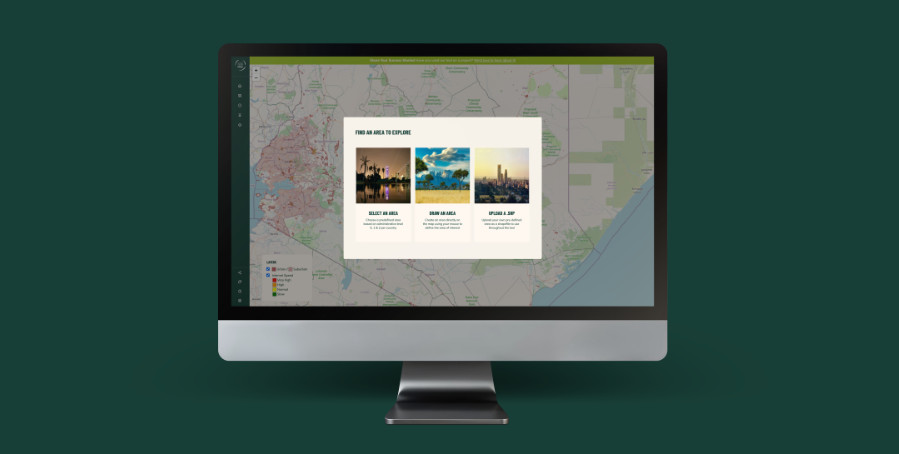
Open Building Insights (OBI)
The Open Building Insights (OBI) tool is a cloud-based interactive platform that harnesses open spatial data and AI to deliver insights into millions of building structures. This initiative, a collaboration between Sustainable Energy for All and IBM's Sustainability Accelerator, seeks to empower energy and infrastructure planners with data-driven tools to drive sustainable change and improve lives.
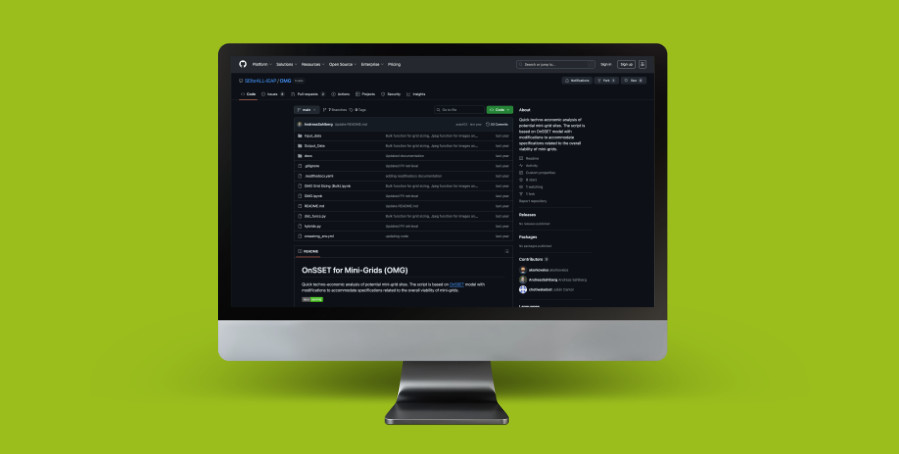
OnSSET for Mini-Grids (OMG)
OnSSET for Mini-Grids (OMG) is an open-source Python tool by SEforALL for rapid techno-economic analysis of mini-grid sites. Built as a spin-off from OnSSET, it automates distribution network design and optimizes hybrid solar-diesel-storage systems based on site-specific data. OMG is developed to function either independently or within national least-cost electrification frameworks.

Adjusting OnSSET To Reflect Grid Reliability Costs
OnSSET (Open-Source Spatial Electrification Tool) is a GIS-based tool developed to support electrification planning and decision-making for the achievement of energy access goals in currently unserved locations. OnSSET chooses the “optimal” technology based on a Levelized Cost of Electricity (LCOE) comparison.
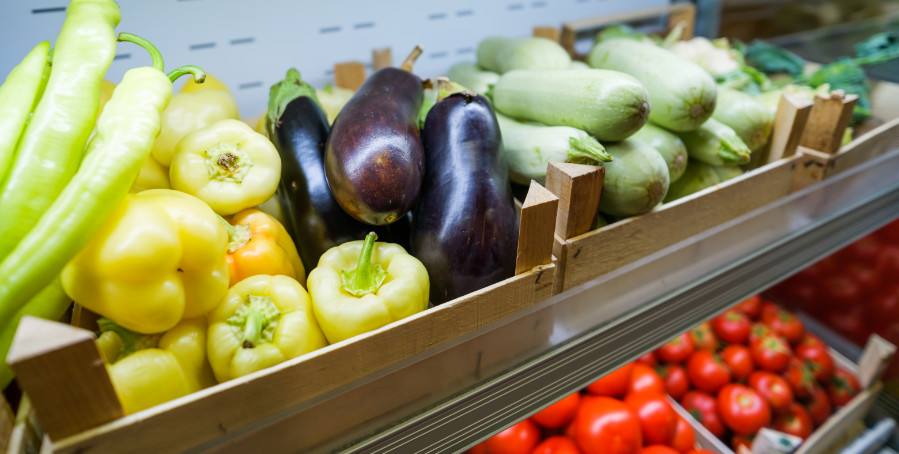
Agricultural Cold Chain Access Planning Tool (AgCAP)
SEforALL is developing the Agricultural Cold Chain Access Planning Tool (AgCAP), an innovative open-source solution designed to enhance electricity access planning by integrating sustainable cooling solutions. AgCAP allows planners and stakeholders to conduct geospatial analyses to evaluate farming and fishing activities, market access, and identify communities that would benefit from cold storage facilities.
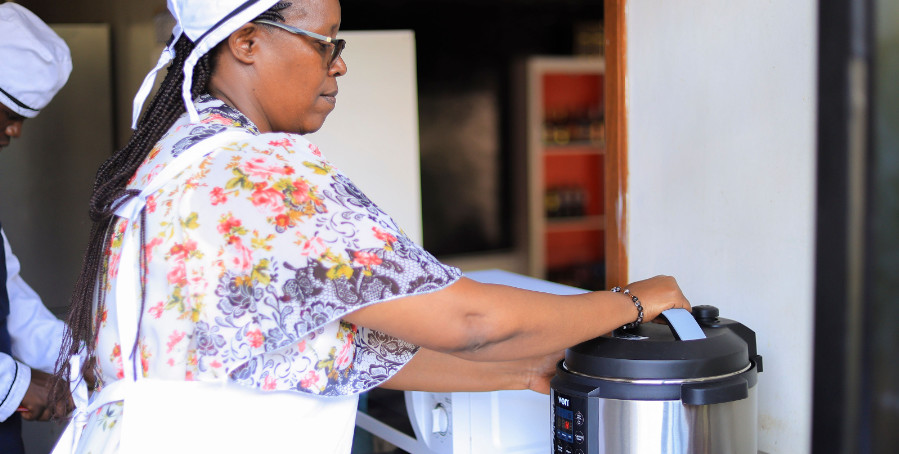
Integrated Clean Cooking Planning Tool (ICCPT)
The ICCPT is a novel approach to modeling the adoption of cooking technologies over time and space, considering human behavior, technologies and fuels supply chains, local deployment of electric and LPG infrastructures, the types of consumers and demand areas, etc. This tool was applied to develop Rwanda’s National Integrated Clean Cooking Planning (NICCP).
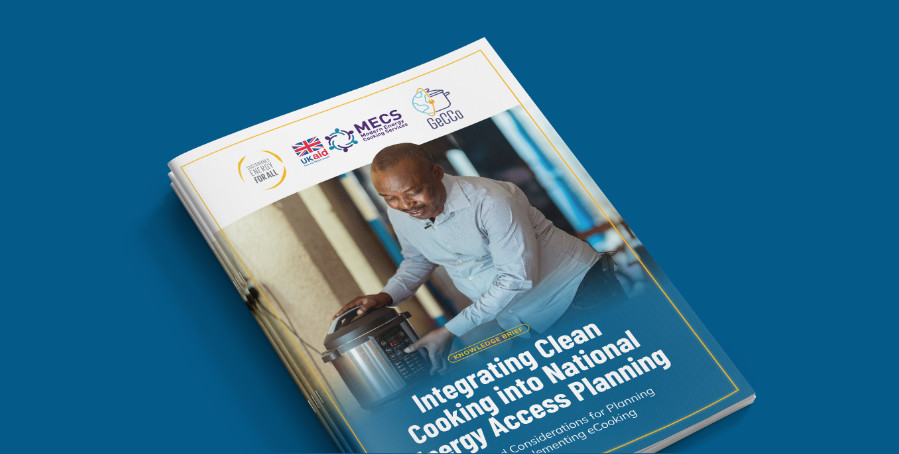
Integrating Clean Cooking into National Energy Access Planning
The Knowledge Brief provides a review of relevant tools and methodologies for integrated energy access planning and gives an overview of policy, finance and knowledge initiatives that help create enabling conditions for these plans to be implemented and drive clean cooking transitions.
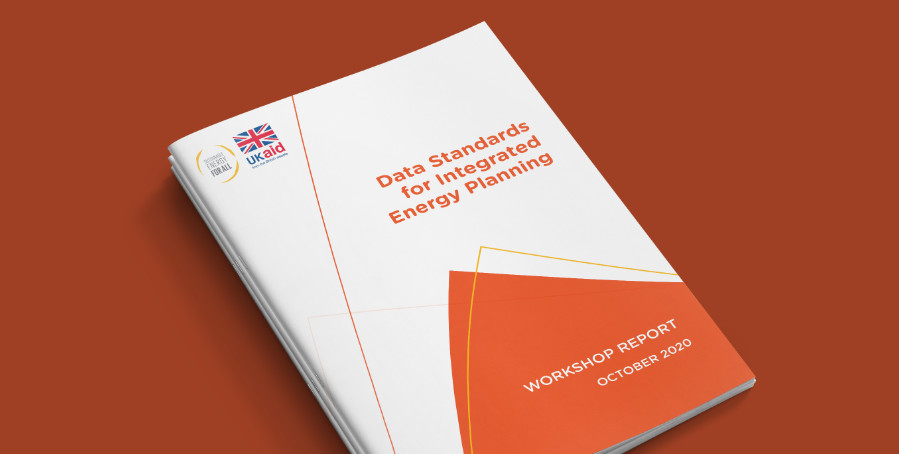
Data Standards for Integrated Energy Planning
This Knowledge brief presents the outcomes of an SEforALL-hosted workshop in July 2020, which brought together experts in data and integrated energy planning. The workshop focused on identifying the data needs and exploring how geospatial-based integrated energy planning can be made more accurate, consistent and practical through better data.
Partners

Meet the team

Nishant NARAYAN
Programme Manager, Integrated Energy Access Planning
Nishant.Narayan@SEforALL.org

Andreas SAHLBERG
Geospatial Data & Energy Modeling Officer
Andreas.Sahlberg@SEforALL.org

Jamie STEVENSON
Senior Officer, Energy Planning
Jamie.Stevenson@SEforALL.org

Davide MAZZONI
Energy Planning Specialist (STC)
Davide.Mazzoni@SEforALL.org

Alexandros KORKOVELOS
Senior Officer, Energy Planning
Alexandros.Korkovelos@SEforALL.org
Julian CANTOR
Energy Planning Analyst
Julian.Cantor@SEforALL.org

Kunda CHANDALALA
Energy Planning Intern
Kunda.Chandalala@SEforALL.org
Sharon KILEL
Energy Planning Intern
Sharon.Kilel@SEforALL.org